As of a few minutes ago, the Complete Album Collection, aka the BobBox, is available to UK Amazon Prime users for a staggeringly low £62.99. This runs out in less than 2 hours time, so if you've been dithering over the decision to get the set, now might be a good time!
http://www.amazon.co.uk/gp/product/B00F6Y3FKW?ref_=gb1h_img_m-6_9307_1cde67fc&smid=A3P5ROKL5A1OLE
This has been a special BobBox Price Check.
Edit: Wow, that sold out FAST.
Bob's Big Box

As a music lover who just turned 40, I thought it was about time I explored the back catalogue of Bob Dylan, an artist I'd largely ignored previously. Right then...
Wednesday, 15 July 2015

Tuesday, 14 July 2015
22. Slow Train Coming (1979)

Whether the surreal, drug-fuelled turmoil of the electric trilogy, the domestic simplicity of the country phase, the almost unbearably painful soul-bearing of Blood on the Tracks, or any other period you'd care to mention, whatever Dylan is currently into, or going through, is somehow reflected in his work. A recent magazine article* used an old quote by fellow Greenwich Village alumnus David Blue; "His songs were always true to the life they were written in". Slow Train Coming is no different.
If you're a fan of Dylan you'll already know the official story of his conversion to Christianity; something along the lines of an audience member throwing a silver cross onto the stage in late 1978, Bob picking it up after the concert, and a couple of days later retrieving it from his pocket while in his hotel room and undergoing a divine visitation.
This was apparently an experience so real and intense ("Jesus did appear to me as King of Kings, and Lord of Lords") that it led him to become a born-again Christian, under the wing of actress and girlfriend Mary Alice Artes (credited on the sleeve of Street Legal as 'Queen Bee') and an LA organisation called the Vineyard Fellowship.
Where on Street Legal Dylan seemed to be searching for something, on Slow Train Coming he's found it, although the answers weren't so much blowing in the wind as residing in the pages of the Book of Revelation. This transformation in Bob's faith is immediately apparent just by skimming through the song titles, Gotta Serve Somebody being a strong contender for the most pious. When Janet Maslin wrote in a review of At Budokan in Rolling Stone, "The fire and brimstone are behind Dylan" she couldn't have been more wrong. Arriving on Barry Beckett's slinky electric piano riff, this album opener informs us in no uncertain terms that as far as Bob is now concerned you either serve the Lord or the devil. He goes into list mode, detailing folks in high and low places (including himself, "...a rock 'n' roll addict prancing on the stage") who must choose whom they obey, prompting John Lennon to express his disgust with the parody 'Serve Yourself'. Serve Somebody won Bob his first Grammy and the single sold well, providing him with his last chart hit, but it also made no. 2 in a 2013 Rolling Stone readers poll of the worst ever Dylan songs, just above 'Wiggle Wiggle' (of which I've yet to have the pleasure - coming in just ten albums' time!).
Listening to Precious Angel on my first play through STC, I was surprised to hear it kick off with a very Dire Straits-y guitar riff, and a quick Google revealed that Mark Knopfler appears throughout the album, specially requested by Dylan who admired 'Sultans of Swing'. Also present is Straits bandmate Pick Withers, who provides a nice crisp drum sound on this song praising both earthly and heavenly love, the earthly passion probably being Artes, who was instrumental in bringing Christ into Bob's life. The version of Christianity here is not of the happy-clappy variety; as well as proclaiming "Ya either got faith or ya got unbelief and there ain't no neutral ground", he sings about a darkness falling from above where "...men will beg God to kill them and they won't be able to die". I imagine that for many of his fans this quite ugly, heavy-handed rhetoric was hard to stomach, but I dare say that in parts of his home country it also brought him a new fanbase. Lyrics aside, Precious Angel came to be one of my favourites on STC (maybe because it sounds a bit like If Not For You), although it's perhaps a tad over-long at more than six minutes.
Acoustic strumming introduces I Believe In You, which describes his 'coming out' as a born-again Christian and the doubt and rejection this provoked in those around him. It's heartfelt but the words are cringey at times, particularly when he croaks out "...even through the tears and the laughter", a lyric that would be more at home on the Fame soundtrack. It ends beautifully though, with a trademark Knopfler liquid solo.
Like Knopfler, producer Jerry Wexler had no inkling beforehand of the overtly religious emphasis of these new songs. The employment of his polished style, mixed with the dexterity of the Muscle Shoals Horns and the restrained input of the backing vocalists may have been an attempt by Dylan to to reach a wider audience with his new important message. The pill certainly needed some sugaring; on the title track, as well as addressing unbelievers and proclaiming the unstoppable Second Coming, he turns his attention to world hunger, false idols, foreign energy and the general shoddy state of America as he sees it. This new kind of finger-pointing sounds rather xenophobic in places, but musically Slow Train is the best song by a mile. As well as some righteous backing vocals and a few soulful MK licks, like all of the better songs on STC it features a decent guitar riff and a funk-lite groove. The 'damned or saved' blues of Gonna Change My Way of Thinking has both of these, although the prominent horns sound perfunctory, lacking the swing you'd expect of Muscle Shoals pros. A welcome bit of blues smut about the "Georgia crawl" isn't enough to counteract the sanctimonious tone.
Another listy song comes next with Do Right to Me Baby (Do Unto Others), a look at the universal ethic of reciprocity the Golden Rule, which sees Bob telling us how he doesn't "wanna judge nobody", hilariously enough. A sparkling, sexy electric piano groove and some fine acoustic picking lift the repetitive lyrics and mediocre melody out of the doldrums. An equally great groove is completely flattened by a boring drum sound on When You Gonna Wake Up, which like its predecessor lacks any backing vocals or strong melody. As well as railing against greed and hypocrisy, more constructively Dylan calls for the listener to strengthen those basic values that can overcome evil.
At this point the album has begun to sound samey, i.e. hectoring fundamentalist preaching set to glossy gospel-funk, but this changes with the last two songs. Man Gave Names to All the Animals is a Sunday school song in a playful reggae-gospel style that made no. 4 on the aforementioned list of worst ever Dylan songs. Like Forever Young and bizarrely If Dogs Run Free it's been made into an illustrated childrens' book. The last verse of the song foreshadows the fall of man, and the listener is left to fill in the final line for himself.
Like Slow Train, closing spiritual When He Returns concerns Armageddon and the return of Christ. Accompanied by just Beckett's piano, Dylan gives his most impassioned performance on the album, and his evident sincerity is genuinely moving. It's a shame we had to wait until the end of the record before this tender, less zealous side of the new convert was revealed, but it makes for a splendid sign-off.
Almost immediately after his conversion Bob stopped playing all of his old songs for a long time, performing only those 'given to him by the Lord'. Whether this was a display of courage or just his usual bull-headedness is hard to say, but he's claimed in later interviews that he didn't really want to write and sing these songs himself, but felt he must. As well as playing just the religious songs, he took to sermonising on stage; the brand of conservative Christianity he preached was that of a vengeful God, lacking mercy and forgiveness. It must have felt like a kick in the teeth to some fans, coming from the bloke who in 1965 urged them not to follow leaders. The man who once stood for freedom of thought and expression was still following his own path but demonising the paths of others, and this proved to be a hard sell, alienating many.
Putting aside the lyrical content for a second (not that easy), the music on STC is mostly as purified as its maker; the sound is clean, tight and unexciting, with an airless quality that leaves me a bit queasy, much like the work of Steely Dan tends to. It's more LA smooth than Muscle Shoals grit, and I'd expect to hear more joy from someone who's just found God, although Precious Angel has uplifting moments. Musically it's bit too 'tasteful' for my palate, like a less spirited version of the Street Legal style. If only he'd put as much feeling and conviction into the medium as he did the message, Slow Train Coming might have been a classic album. It may indeed be true that the devil has all the best tunes.
*Mojo 60s Issue 3, June 2015
*****BobBox price check*****
amazon.co.uk - £138.99 (free postage)
Discogs - from £99.92
Spin CDs - £119.99 (free postage)
Bob Dylan Official Store - £175.99
All prices correct on 14/07/2015
Thursday, 2 July 2015
21. At Budokan (1979)

Street Legal, recorded after At Budokan but released first, was described (or slammed) by critics for its supposed 'Las Vegas' style, which I wasn't really buying, but during my first listen to AB, at which the same accusations were levelled, I had to admit they had a point. Most of the songs are radically reimagined using the same eight-piece band as on SL, so as well as Billy Cross's excellent lead guitar we get sax and violins, plus soulful backing from three female vocalists. In addition, saxophonist Steve Douglas brings along a couple of other wind instruments, and David Mansfield adds pedal steel and dobro to his armoury. All this, coupled with the fact that Dylan is still in great voice at this point, gives us a double album of flamboyant, energetic, grandiose and occasionally unhinged renderings of 22 of his best known songs; a brand new Greatest Hits package, if you like. I flipping love it.
The Japanese promoters had sent Dylan a list of the songs they wished him to play, and surprisingly he seemed to co-operate, though I can't help thinking that there was an element of mischief in him playing the songs they requested in these new, unexpected ways. Then again, Bob is his own folk tradition and has never treated his work as sacred relics, frequently altering his songs throughout his career. But I bet he got a kick out of it.
From the first 30 seconds of opener Mr Tambourine Man, with it's chiming electric guitar and frisky 'Bod' flute (one for UK kids of the 1970s there), it's clear that all bets are off and anything might happen. Going, Going, Gone is sped up and given a showbizzy makeover; I Want You is slowed right down and turned into a lonely paean. The reggae version of Knockin' On Heaven's Door comes as no surprise after Clapton's similar 1975 cover, but this strategy is also applied to a thumping take of Don't Think Twice, It's Alright. Ballad of a Thin Man is the most 'cabaret' song on the whole album, the spooky organ of the Highway original augmented by the showy, dramatic 'dah-dah-DAH-dah' of the horn section and a skronking sax solo.
Most fun is the marching band glam-rock stomp of All I Really Want To Do which oddly enough benefits from the prominent brass and echoing bvs. It's Alright Ma (I'm Only Bleeding) becomes an excitable Wings soundalike, with Bond-theme orchestral stabs and fiery guitar licks, whilst All Along the Watchtower is heavily indebted to the electrified Hendrix version, albeit with violin taking some of the histrionic strain. Less good are the two representatives of Desire; Oh, Sister is a dreary misfire that grew on me a little once I banished the gorgeous original from my mind and treated it as a completely new song, and One More Cup of Coffee (Valley Below) is a staccato bongo-laden sax-fest that haters of the hook-shaped instrument (and I know there are many) should avoid studiously. Another disappointment is the version of Shelter From the Storm, here re-shaped into a monotone, plodding chant, where the only musical relief comes from the dreaded (not by me, I hasten to add) sax.
To add to all the excitement, Bob surprises and confounds us (I should be used to this by now) with his between-song patter, something that hasn't cropped up on a live album so far in the BobBox. After a raucous Maggie's Farm, complete with a Fame-inspired Bowie guitar riff, he thanks the audience and tells them the name of song (presumably just in case they didn't get it from the dozen or so times he yelled it during the performance). It's not the only 'thank you' on At Budokan; Dylan returns the good manners of his Japanese fans with a fair amount (for him at least) of polite, gracious chat. He introduces the complex Simple Twist of Fate with an ironic "Here's a simple love story....happened to me". Like several of the songs on AB, it has some lyrical changes; "he" becomes "she" in the first verse, and the "strange" hotel is now a "renovated" one, much like the lyrics and melody, which is also slightly different. The latter verses are almost completely re-written, but the sense of loss and faint hope remain. Bob is unable to resist allowing a little sax warble after the line "A saxophone somewhere played", and equally forgivable is "He hears the ticking of the clocks" followed by a 'tap-tap-tap' on the snare. In a cheeky nod to the bootleggers, he announces Is Your Love In Vain? with "Here's an unreleased song. See if you can guess what it is". The lyrics of this still grate on me, but overall I've really warmed to it since Street Legal, even though the Budokan version is much the same.
Two of Dylan's biggest anthems are sensibly left unchanged in terms of melody, but Like A Rolling Stone is rocked up further, with the rush in the chorus provided by both organ and sax (blimey, how many times have I typed "sax" so far?), and a nifty guitar solo near the end. Blowin' in the Wind kicks off Disc 2 with tinkling piano and gentle "ooh-oohs" from the backing singers. The anger of the original is gone and it's now a soft lament with a decent instrumental section in the second half that boasts some gutsy playing from Billy Cross. I Shall Be Released was never one of my favourites and the melody and arrangement changes in the AB version doesn't make it any worse or better to my ears.
Also given a straightforward reading are my two absolute favourites here. Just Like A Woman is the loveliest I've ever heard it, with sympathetic and emotional playing from all, and the sweetest bvs from the ladies. Love Minus Zero/No Limit is an absolutely brilliant, poppy revamp, featuring a harmonica intro (I've really missed this instrument on the last couple of albums!), and a combination of violin, flute and recorder that works to great effect.
Things get sentimental for the encores; a shmaltzy, overblown but ultimately enjoyable Forever Young comes first, and clearly goes down well with the audience. This is followed by a relatively unvarnished The Times They Are A-Changin', before which Bob resumes the patter by first thanking the crowd again, then telling them "I wrote this song also, about fifteen years ago. It still means a lot to me, I know it means a lot to you, too". It's quite weird to hear him so good-humoured and nostalgic; my cynical side tells me he's probably taking the piss a little, but my naive simple-headed side makes me want to believe he's sincere, and that's the part I'm going with.
At first I wasn't keen on the kitchen-sink approach of At Budokan - especially that flute! - but I quickly came to love it. I already have the studio versions of all of these songs, so really, why would I want carbon copies of them on a live album? Dylan has been quoted as saying "...a good song should be able to stand redefining, or else it's dead", and he's quite right of course. With the help of guitarist Steven Soles (to whom Bob gives credit for many of the arrangements), he's managed to give his fans practically a whole new album of songs. That many of those fans disliked them didn't seem to worry him at all - it certainly hasn't stopped him re-jigging his work in a live setting over and over since. On AB he sounds like he's having a great time, which for all its good points is more than I can say for Hard Rain two years earlier. I'm still not entirely convinced by the 'Vegas' tag - AB is more E-Street than Fremont Street - and although not all of the makeovers work, the exuberance, musicality and sheer sense of FUN on these two discs means that I'll definitely be pulling this one out of the BobBox more often than Before The Flood or even Hard Rain.
What do you think of Bob Dylan At Budokan? Love it? Hate that bloody sax? Let us know in the comments below.
Note: This is album no. 21 in the box, marking the halfway point. If you've been reading since February, thanks for sticking with me this far!
*****BobBox price check*****
amazon.co.uk - £141.67 (free postage) ***UP by forty quid since last week!***
Discogs - from £106.39
Spin CDs - £119.99 (free postage)
Bob Dylan Official Store - £175.99
All prices correct on 02/07/2015
Wednesday, 24 June 2015
20. Street-Legal (1978)
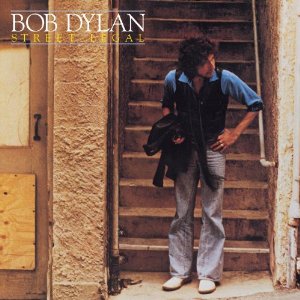
Opener Changing of the Guards slowly fades in, the first words "Sixteen years" referencing his time in the business so far, and then - what's this? - echoed by a gospel trio? Is this going to be another Self Portrait? Backing singers Carolyn Dennis (who would much later marry Dylan), Jo Ann Harris and Helena Springs crop up throughout the album, and for the most part are an enjoyable addition, here providing this Tom Petty-ish number with some uplifting call-and-response. Another, more surprising element is the saxophone, which on Changing of the Guards is employed between verses in place of a chorus, adding to the heartland rock feel. The lyrics are cryptic and dense, with prominent biblical and tarot references. It's a strong opening track, but like several songs on SL it doesn't quite fulfill its promise, and fades out again without reaching any kind of resolution.
New Pony contains double entendres galore and some fairly nasty lyrics aimed at ex-wife Sara. As a mean divorce song it works quite well, although the repetitive bvs are unsubtle and quickly become annoying. The sax break at the end is meatier than than the rather weedy sax in the previous track, and the guitar riff is a beefy, sexy blues. The song as a whole makes for a simple palate cleanser between two lengthy, lyric-packed ones. The first couple of times I heard the eight minute-plus No Time To Think it outstayed its welcome pretty fast, but it's now one of my favourite songs on SL. The mixture of a trad-folk meter with gospel backing vocals, plus twin fiddles, electric guitar, rolling piano and Bob at his wordiest sounds like a nightmare on paper, and indeed it took some getting used to, but now I wouldn't have it any other way. I don't know about 'no time to think', but he certainly hasn't left any room to; his mind is crowded with dozens of concerns, which spew out over 18 bewildering, cramped verses, each with its own set of internal (and often shoehorned) rhymes. If you're not keen on this song, I urge you to google the lyrics, turn it up loud and SING it. It'll leave you breathless by the end (especially if you try to do the bvs as well), but I guarantee you'll have a blast and hear it in a whole new way. In fact I now can't listen to it without doing this, so I'm sure it won't be long before the lyric sheet becomes superfluous.
For me, the ballad Baby Stop Crying is the weakest song on Street-Legal. The verses are good, but the repetitive chorus, endlessly echoed by the backing singers, is atrocious, making it drag terribly over the five minute running time. If only this woman had pulled herself together at Bob's initial request, it could all have been over in less than a minute. Musically it's a pleasant tune, furnished with shimmering guitar and wine-bar sax. The lyrics are irritatingly self-pitying, but not quite as bad as those belonging to next track Is Your Love In Vain? After a lovely Stax-y intro where Steve Douglas' saxophone is joined by Steve Madaio's trumpet, Dylan proceeds to whinily quiz his lover over the worthiness of her adoration, before deciding that yes, "...I'll take a chance, I will fall in love with you", followed by a quick enquiry about her domestic abilities. Yuk. Good luck with that, dear.
Things are pulled back from the brink of vainglorious smuggery by the beautiful Señor (Tales of Yankee Power). Where during the previous track Bob was pleading for acceptance, here he pleads with the titular Lord on a journey filled with uncertainty and dread. Whether the song's subject matter is God, war, the nuclear threat, drugs, death, none of these or all of them, the protagonist's questions go unanswered. Piano, organ and that sax again move at a stately pace, and there's a neat little 80s guitar solo just before the final verse (well, the 80s really began in 1978 didn't they?). The backing vocals aren't put too high in the mix, and their mournfulness adds to the sense of loss and hopelessness.
It's immediately followed by the gradual fading in of True Love Tends to Forget, a tender but unremarkable ballad. Street Legal is quite heavy on plodders, and after four in a row the country gospel of We Better Talk This Over comes as a welcome change with its tambourine and cowboy guitar. Fairly mundane breakup lyrics are bolstered by better ones such as "The vows that we kept are now broken and swept, 'neath the bed where we slept" and "Eventually we'll hang ourselves on all this tangled rope", then he spoils it again in the final verse by rhyming 'magician' with' transition'.
Dylan has often topped and tailed his albums with high-quality corkers, and the strong top of Changing of the Guards is equalled by the dynamic tail of Where Are You Tonight? (Journey Through Dark Heat). The dark heat could apply to any number of things including drug dependency and of course his marriage. I can detect the beginnings of acceptance amid the often inscrutable language, and the music is buoyant and optimistic. There's joy and relief in the last verse, especially "I can't believe it, I can't believe I'm alive", but this is immediately tempered by the longing for Sara that still lingers. The gospel "hey-hey-heys" bring the album to a positive end, helped along by a great guitar outro that puts me in mind of McCartney's bit of the outgoing solo at the end of, erm, The End.
One of the criticisms levelled at SL was that it has a glitzy "Las Vegas" sound. I disagree with this claim; although Bob employs a polished pop-rock band to back him up, I can't hear the gaudiness that these terms imply, and I suspect that this description is based more on Dylan's touring get-up at the time, i.e. the startling white outfit on the back cover of the record (with a startling moose knuckle) than the actual sound. The silly "Vegas" tag and the original muddy mix aside, I can understand the lack of love in some quarters for this record; for one thing his voice has begun to show signs of deterioration and is now more nasal then ever. The music sometimes works against the lyrical content; there's often a tug-of-war between the spiritual backing vocals and the sleazy sax and guitar, and these combined can overwhelm Bob's words. His attempt at a new style reflects the themes of change and searching that run through the album, and although to begin with I found it a bit bland and samey, repeated listening revealed its character. Even the under-rehearsed, over-employed backing vocals grew on me (these were reportedly inspired by Bob Marley's I-Threes, whom Dylan had seen in the UK and greatly admired).
Maybe if Street-Legal had been produced with the spacious guitar and subtle rhythm section of BOTT, or perhaps the earthy muscle of The Band, it would have been better received, but as well as finding the poppier aspect a refreshing change after the emotionally wearing BOTT/Desire/Hard Rain era, I've come to enjoy and admire it for what it is: a collection of well-written songs with mostly strong melodies, engaging lyrics and enjoyable playing. So, business as usual then.*
*well alright, no harmonica :)
*****BobBox price check*****
amazon.co.uk - £99.99 (free postage)
Discogs - from £106.58
Spin CDs - £119.99 (free postage)
Bob Dylan Official Store - £175.99
All prices correct on 24/06/2015
Tuesday, 16 June 2015
19. Hard Rain (1976)

Four songs on Hard Rain were recorded on the 16th of May in Texas and the remaining five on May 26th at a huge stadium in Colorado in the pouring rain. This latter date was filmed for a TV special, which can be seen here: http://dylantube.com/hard-rain-1976/ Not only is Dylan angry (and wants everyone to know about it), according to bassist Rob Stoner, Bob was "really hitting the bottle that weekend", and what we get for much of Hard Rain is a raw, intense performance that's very different to the Bootleg Series 5 which documents the carnival atmosphere of the autumn leg of the RTR.
Things kick off with a rollicking country-rock reinvention of Maggie's Farm from BIABH. Where the original was acidic and rather sarky, this is almost cheery and features some wonderful pedal steel from David Mansfield and plenty of lead guitar licks from ex-Spider Mick Ronson. It's the first song to demonstrate the often criticised stop-start arrangements that were a prominent feature of the tour, but the crowd seem to appreciate it. On the television footage Ronson can be seen removing his guitar and ambling off backstage before the others go straight into One Too Many Mornings. It's a radical re-working of what was a quietly regretful song on 1964's The Times They Are a-Changin', and no doubt done to better suit Dylan's mood. It benefits greatly from the full-band treatment, particularly from Scarlet Rivera's keening violin which adds pathos as it twists around the guitar during two gorgeous instrumental breaks. The first of many lyric changes on Hard Rain appears; tacked onto the end is "I've no right to be here, if you've no right to stay, until we're one too many mornings, and a thousand miles away". I love it; the changes in melody, instrumentation and words give us a brand new song fashioned from an old one.
Stuck Inside of Mobile With the Memphis Blues Again is one of my favourite songs from Blonde On Blonde, so for me it's difficult to ruin, but here Bob gives it a good try. He sounds dreadfully tired and the whole thing is very laboured despite the bombastic arrangement, so it's probably just as well that three verses are excised from the middle. Where Bootleg Series 5 brims with energy, Hard Rain suffers from the sound of a band and its leader drained of all enthusiasm by a tough tour and a spark that vanished weeks ago. It's not helped by the muddy mix either, but at least the CD in the BobBox is an improvement on the original vinyl release.
The rendition of Oh, Sister has the same basic arrangement as on Desire, understandably so as the newest song here. The only differences are the lack of harmonica (Bob's gob-iron is completely absent from Hard Rain) and of Emmylou's haunting backing vocals which are replaced by some God-awful shouting. Also Dylan's voice is a bit wobbly, but a song this superb is able to shine through the murk, assisted by Rivera's dazzling, sorrowful playing.
Next up is Lay, Lady, Lay, its re-written, saucier lyrics played over a kind of country bump 'n' grind (words I never imagined would appear on this blog!). The subtle suggestion of the Nashville Skyline version becomes a brazen exhortation; "Forget this dance, let's go upstairs, let's take a chance, who really cares?", and is adorned with the beautiful pedal steel that the shouty Before The Flood rendering lacked. Even more of a surprise is the bouncy Shelter From The Storm, its tender acoustic strumming transformed into an energetic shout-along with layers of electric guitars and violin weaved into a dense wall of fuzz, underpinned by lively percussion and ska-ish strokes.
And so to my favourite performance, that of You're A Big Girl Now, the second of three selections from BOTT. The tension brought on by the frequent pauses is broken over and over again to heartbreaking effect, stopping and starting like the corkscrewing pain described in the lyrics. The drawn out 'ohhs' from the original here become even longer 'heeeeys' that slay me each time, as does the downbeat delivery of the last word of each verse. Bob fumbles the line "I can change, I swear", which comes out as "Well I ...nnn...ange, I swear", which kind of breaks the tension in a different way, but is very funny, particularly as it's usually such a poignant part.
He gets it back together for a full-band version of I Threw It All Away, re-tooled in stadium-filling style, and "take a tip from one who's tried" feels more appropriate than ever. But nothing on Hard Rain seems to sum up Dylan's frame of mind as much as the final song. His fraying marriage has reached the point of no return, and BOTT's bitterest offering has had time to fester and is now poisonous. Idiot Wind becomes a savage marathon; Sara's ditch becomes her grave, and her chestnut mare a "smoking tomb" (changed perhaps in deference to Roger McGuin, present on the tour). It's Dylan's most energised performance on the album and is perfectly suited to the RTR arena-rock treatment. His raging glory disappears momentarily when he slips up then corrects himself, resulting in an amusing "...every time you move your mou..teeth!", but on the whole it's a killer version, and reports of an ugly row with either Sara/her lawyer/both just beforehand are believable.
This simmering display wraps up what is often a quite lethargic album, despite its powerful, hard-rock approach. The 'busy' instrumentation (i.e. probably too many coked-up guitarists crowding the stage) is done no favours by the poor quality of the recordings. The choice of songs, given that there would have been plenty of other material available, including duets with Joan Baez, is curious. However, although not all of the new spins on older songs work, Hard Rain has a unique mood and cohesion, making it an ideal compliment to the very different Bootleg Series 5. Why these nine songs were chosen as the only official document of the Rolling Thunder Revue until 2002 though, is baffling.
*****BobBox price check*****
amazon.co.uk - £99.99 (free postage)
Discogs - from £108.30
Spin CDs - £119.99 (free postage)
Bob Dylan Official Store - £175.99
All prices correct on 16/06/2015
Wednesday, 10 June 2015
18. Desire (1976)

Having lifted the veil on his private life in Blood On The Tracks, here Bob returns the listener to a safe distance; Desire looks out upon the world rather than peering inward. A broad theme of escape pervades, and the rich, exotic sounds make this his most colourful album yet, its musical and lyrical imagery as vivid as the cover photo of Bob in his furs and groovy hat.
Things get off to a powerful start with the first of two topical story songs. Hurricane is probably the best known song on Desire, and takes up the case of former middleweight boxer Rubin Carter, jailed for triple murder in '66 on rather shaky grounds, and in Dylan's opinion framed by a corrupt and racist judiciary. The straightforward lyrics pull no punches, and impassioned vocals from Bob and backing singer Ronee Blakley (a film actress and singer songwriter) combine with furious strumming and frantic congas to sustain a sense of urgency throughout the 8½ minute running time. The highlight, though (for me at least) is Rivera's dynamic violin, which speaks a language of its own, filling all available spaces and at times seemingly duetting with Dylan's lines. It's obvious that his melody-writing mojo which resurfaced on BOTT was still going strong, and this is demonstrated again on the next track. Travel features prominently on Desire, and the captivating Isis is the first song to take us to far-flung places. A voyage on several levels, Bob takes to the piano to tell of a doomed adventure where the hero tries to escape responsibility and find something "easy to catch" by joining a mysterious man on a grave-robbing expedition. The separation and eventual reunion of the main character and his love Isis somewhat mirrors the situation at the time between Dylan and his wife. The clunky rhyming of "outrageous" and "contagious" is quite cringe-making, but the lack of a chorus, some thumping percussion from drummer Howard Wyeth and a relentless tambourine drive the song along, with Rivera's winding violin working its magic once more.
Emmylou makes her debut on Mozambique, which allegedly began as a game between Dylan and Levy to see how many rhymes for "-ique" they could come up with. This is believable as it's the weakest song here and reads like a holiday brochure. It's also an unusual choice for a song about an earthly paradise (perhaps with ironic intent), as Mozambique had become newly independent from Portugal in June 1975 after a ten-year insurgency war. Sadly it was to be torn apart again in 1977 when civil war broke out, lasting until '92.
One More Cup Of Coffee (Valley Below) was written by Bob alone, and tells of a gypsy family whose daughter with "..eyes... like two jewels in the sky" fails to return the love of a man who must now leave. It has a distinct Middle Eastern feel, and after a slow build-up of instruments beginning with acoustic guitar, then Rob Stoner's bass, Scarlet's violin and finally drums, Dylan cantillates impressively on the first verse before Emmylou's pure voice duets with his on the chorus. She unfortunately fluffs her first line, firstly missing her cue then mistakenly singing "..'fore I go" instead of "..for the road". This is an example of Dylan's one-take, no-rehearsal method, which Emmylou reportedly hated, wanting to do re-takes when she wasn't happy with her performance. Luckily for her, on the next song, Oh, Sister, her gorgeous country harmony vocals were recorded separately, one of just a few cases of overdubbing on Desire. Another song of unreturned affection, here violin and harmonica twist around one another compellingly between verses in place of a chorus.
Next we come to the blot on the shimmering desert landscape that is Desire. On the 11-minute ballad Joey, Dylan attempts to paint vicious mobster Joey Gallo as a Billy The Kid-style folk hero, and is unconvincing. Despite the questionable subject matter, it's musically uplifting for the first few minutes (although the cueing in of the accordion with the word, erm, "accordion" is a mite cheesy), but its painfully slow pace renders it turgid before it's even halfway done. This is where having a vinyl copy of the album came in handy - by switching to 45rpm not only did it sound peppier, but it was also over much quicker. I've had a listen to some of the songs from the Desire sessions that didn't make it onto the album, such as Golden Loom and Catfish, and agree with those who've suggested that one of these could have taken the place of Joey, improving it no end. Dylan much later laid the blame for the questionable and also rather cumbersome lyrics entirely at the feet of Levy, and even if this was a fib, I don't really blame him for trying.
And so to Mexico, where we join an outlaw and his love Magdalena on the run after he shot Ramon (presumably Magdalena's husband) in a cantina. Romance In Durango is a great Western movie in song, with bouzouki, mandolin, accordion and brass adding spice to the cinematic spectacle. No fewer than five guitarists are credited too, including one Mr. Eric Clapton. Bob even sings in Spanish on the chorus, translated as "Do not cry my dear, God is watching us.... catch me, my life". Harris' backing vocals add a huge dollop of desperation to this tragic tale, although the live version on the Bootleg Series Vol. 5: The Rolling Thunder Revue (yes, I have now succumbed to this non-BobBox series), which doesn't feature her, is even better in my opinion for its castanets and terrific stop-start arrangement.
Romance In Durango segues straight into Black Diamond Bay, where we pack our bags for the last time and head out to a tiny, glamorous island. Here, after a gloriously long intro featuring harmonica, violin and frisky percussion, we find various characters who have come to escape reality, but end up escaping life entirely as the island is engulfed by a volcano. The players include an unnamed woman, a soldier, "the Greek", a tiny man, a dealer and a stranger, and several things are apparently references to Joseph Conrad's novel 'Victory'. In a disturbing payoff, during the final verse a detached observer watches the disaster unfolding on the TV news before losing interest and switching off to go and fetch another beer.
Desire's final track is the other song written by just Dylan. With a harmonica intro, over thick bass and gentle violin, and recorded with his wife watching from the other side of the glass, Sara is a series of snapshots of their life together, including their children playing on a beach, their wedding day and "Drinkin' white rum in a Portugal bar". He pays unashamed tribute, describing her as "Sweet virgin angel, sweet love of my life" and as someone who saved him from himself. He is simultaneously begging her to stay and saying goodbye, but to me his heart doesn't seem to be in it. It's a most unconvincing love song, sounding laboured at times, and the line "Now the beach is deserted except for some kelp", presumably chosen just to rhyme with 'help', is dreadful. Still, it's a pleasant-sounding song, but a sad epitaph to their marriage which would officially end in 1977.
I bought my vinyl copy of Desire at a car boot sale a couple of years ago; it was my first ever Dylan record and for a long time my only one. Someone asked me what I thought of "all the bloody violins", and for a moment I didn't know what to say - as far as I knew, this was what all Bob's albums sounded like! I suppose at the time of release, this new vibrant, gypsy-band sound was a surprise to his fans, and I can understand how some might have found the ever-present violin quite wearing. For me, it combines perfectly with the other newly introduced instruments. With Emmylou's haunting harmony vocals, Dylan and Levy's more direct, less ambiguous lyrics, its strong melodies, rich musicality and the exotic locations scattered throughout, Desire has a well-defined personality distinct from anything else in the BobBox so far. Dylan's singing voice seems to be at its peak in the studio, and this is borne out by the live recordings from the first half of the Rolling Thunder Revue.
Next I'll be listening to Hard Rain, recorded during the second leg of the tour. This will again be on vinyl as well as CD, as I picked up a copy for £1 a few weeks ago and have been saving it up. I hope you can join me again for it.
*****BobBox price check*****
amazon.co.uk - £99.99 (free postage) LOWEST FOR AGES - GET IN QUICK!!
Discogs - from £101.97
Spin CDs - £119.99 (free postage)
Bob Dylan Official Store - £175.99
All prices correct on 10/06/2015
Tuesday, 2 June 2015
17. The Basement Tapes (1975)

The Basement Tapes were of course famously recorded with The Band, in the months following Dylan's mysterious motorbike accident. Sessions initially took place in the 'Red Room' of Bob's family home just outside Woodstock, then moved to the basement of a local house named Big Pink where the Band had taken up residence after the cancellation of some 63 tour dates planned by Dylan's manager Albert Grossman. The sessions seemed to provide Bob with the spiritual and physical R&R he so desperately needed, but as well as playing and recording lots of old folk tunes and pop covers (teaching the Band many of the former along the way) he used the time - and inspiration - to write a number of new songs. In these he coupled an ancient, traditional, American sound with his own free-association, stream-of-consciousness lyrics, resulting in a collection of songs which are by turns dramatic, hilarious, rocking, weird and moving, and in some cases all of these at once. Of the hundred-plus rough and ready recordings made (you can get the lot here if you're so inclined) 16 of them made it onto this 1975 album, as well as several more tracks recorded by just The Band (some apparently as late as 1975). By the time of it's release, a 14-song acetate produced to hawk some of the material around the labels for other artists to cover (with great success) had been widely bootlegged, which bolstered the mystique surrounding the sessions. No doubt this contributed to the album being put out, albeit after almost eight years.
The cover photo gives a first clue to what's in store, depicting what looks like a bunch of freaks and misfits from a traveling circus, plus Bob and co., in a kind of creepy version of the Sgt. Peppers sleeve. Dylan appears to be holding an invisible bow across a mandolin for some reason, and on the inside cover a blonde nun is perched on his lap as he gazes up at her, oblivious to the oddballs around him in the mocked-up basement, including a strongman rolling around on the floor. Many of the characters make an appearance in the songs, of which the majority fall into three broad categories: nonsense, good-time songs; songs with a sense of yearning for salvation or the truth; and Band Stuff.
I mentioned how it took a while for me to get into The Basement Tapes; well Lo and Behold! was the first song to stick in my head, due to the (irritatingly) catchy chorus. It belongs firmly in the nonsensical/good-time camp, sounding like an absurd drunkard's tale, including a line about buying his girl a herd of moose. Like many of the songs here (including the even shorter Odds and Ends) it's no more than a sketch. Many of TBT's lyrics were made up on the spot; Bob and the boys were often just goofing off, playing around and seeing what they could come up with, so words were unimportant much of the time. By improvising as he went along, a lot of gibberish was produced, but this adds to the carefree feel and matches the sloppy playing and poor sound quality, lending the recordings an overall sense of warm, relaxed camaraderie. My favourite is probably Apple Suckling Tree, a Froggy Went A Courtin'-style ditty almost throwaway in its delivery, with a breezy organ solo from Garth Hudson.
Levon Helm had left the '66 tour under a cloud and wasn't present for much of the Basement sessions (at one point he was employed on an oil rig). Robbie Robertson took to the drums occasionally, but many of the tracks are drumless. This doesn't take away any of the good-time feel from Million Dollar Bash, about a raucous do up the road where Silly Nelly tells a yarn, Jones takes out the trash and the narrator takes his 'Poh-TAY-toes' down to be mashed. What a swell party that was! On Clothes Line Saga, Dylan delivers a deadpan laundry-based parody of Bobbie Gentrie's hit Ode To Billie Joe while the Band noodle gently in the background, and during the equally straight-faced Please, Mrs. Henry, where Dylan pleads with a landlady for hospitality, he almost loses it during the final chorus and collapses into a brief, drunken-sounding chuckle. I disliked the repetitive Yea! Heavy and a Bottle of Bread, with it's talk of a pus-filled nose (blee!), but loved the bonkers babble of Tiny Montgomery, even though this is the track with the poorest sound quality of all. Here's the wonderful gobbledygook of the third verse. Various lyric sources differ greatly - even the words in the official lyric book don't quite match up to the take used on the album - but this is what I can hear:
"Scratch your dad
Do that bird
Suck that pig
And bring it on home
Pick that drain
And nose that dough
Tell 'em all
That Tiny says hello"
Tears of Rage is a beautiful, mournful lament from a betrayed father to his daughter. Co-written by Dylan and Richard Manuel, and later recorded by the Band for their debut album, the chorus features some deeply emotional harmonies from Manuel and Rick Danko, and thank goodness no drums were nailed on later. We get more beautiful vocal harmonies on the country blues of Nothing Was Delivered, where a sense of loss and a demand for truth is set to an aching melody. The Band's real value to the type of music made during these sessions is demonstrated particularly well here; their playing and their singing make the remorse and anger of the protagonist almost tangible. The search for some kind of truth is also explored in Open The Door, Homer, on which Dylan recounts seemingly nonsensical advice from his pals Jim, Mick and Mouse, although "Take care of all your memories....for you cannot relive them" is a bit of a gem.
One of the more fully-formed songs on TBT is the cryptic drama of This Wheel's On Fire, most famously covered by Julie Driscoll with The Brian Auger Trinity in 1968. This was a Dylan/Danko co-write and Robertson added acoustic guitar overdubs in 1975 which didn't do it any harm. The Band later recorded it themselves for their Music From Big Pink album, but I much prefer the eerie Basement Tapes version.
Apart from the short Crash on the Levee (Down in the Flood) with its doom-laden blues lightened by twirling organ, this leaves us with the category 'Band Stuff'. Of the eight songs here featuring just The Band, two were written by Dylan. Long Distance Operator was recorded in LA in 1968 and for me is spoiled by some particularly strangulated vocals from Manuel. The version used here is an outtake from the Big Pink sessions. It's clear that the bluesy Don't Ya Tell Henry, also written by Bob, is a later studio recording (from 1975 in this case) due to the tighter, more rehearsed feel, which stands out like a sore thumb despite the sound being deliberately muddied in an attempt to make it fit with the genuine basement recordings. This method was applied to other the Band-only material, which includes a cover version of the traditional work song Ain't No More Cane (this is excellent) and five Band originals, the best of which are the sweet Bessie Smith and the gritty Yazoo Street Scandal, probably because they feature other band members than Manuel on lead vocals - I really can't understand how some people can enjoy his creaky whimpering on tracks like Orange Juice Blues (Blues for Breakfast) and Ruben Remus.
Although I like several of the Band's own songs, I do feel that Robbie Robertson took a bit of a liberty with the compilation of this album. Over one hundred recordings were made in that basement, and yes of course many of them were no doubt unusable sketches, but was adding overdubs and later Band tracks a real reflection of what went on during those months at Big Pink? I think it would have been better if songs such as Quinn The Eskimo and I Shall Be Released had been included instead (even though live versions of these had already been released on Self Portrait and Before The Flood, respectively).
This minor gripe aside, I came to very much enjoy and appreciate The Basement Tapes, although it took me somewhat longer to get into than Bob's other albums so far. I like the fact that we are listening to Dylan with his guard down - remember that none of the recordings were ever meant to be heard, and even the sales demos not by the public at large. It shows him at his most unselfconscious, kicking back with friends, and this translated into a collection of songs that mixed blues, folk, country and Cajun styles, whose humour, warmth, looseness and merriment still remain some 48 years later. While much of the pop world was putting out complex, layered psychedelia, Dylan and The Band succeeded in making out-of-time music that became timeless.
*************************************
Note: Initially I got into a bit of a muddle listening to the vinyl copy of TBT, as the pressing I bought from a car boot sale (UK 2nd pressing, £3) has an altered running order from other versions. Side 1 is just fine, but Side 2, labelled here as Record 1 Side 2 has the songs from what's correctly listed on the sleeve as Side 4. Side 3, labelled Record 2 Side 1 has the tracks from the original Side 2 (you still with me?), and Side 4, labelled Record 2 Side 2 has what should be the songs from Side 3, i.e. beginning with Too Much of Nothing. Nerds among you can see this pressing here, including photos of the labels: http://www.discogs.com/Bob-Dylan-Band-The-Basement-Tapes/release/1605886
Uber-nerds can compare and contrast various pressings here: http://www.searchingforagem.com/1970s/International019.htm
*****BobBox price check*****
amazon.co.uk - £99.99 (free postage) LOWEST FOR AGES - GET IN QUICK!!
Discogs - from £107.06
Spin CDs - £119.99 (free postage)
Bob Dylan Official Store - £175.99
All prices correct on 02/06/2015
Subscribe to:
Posts (Atom)